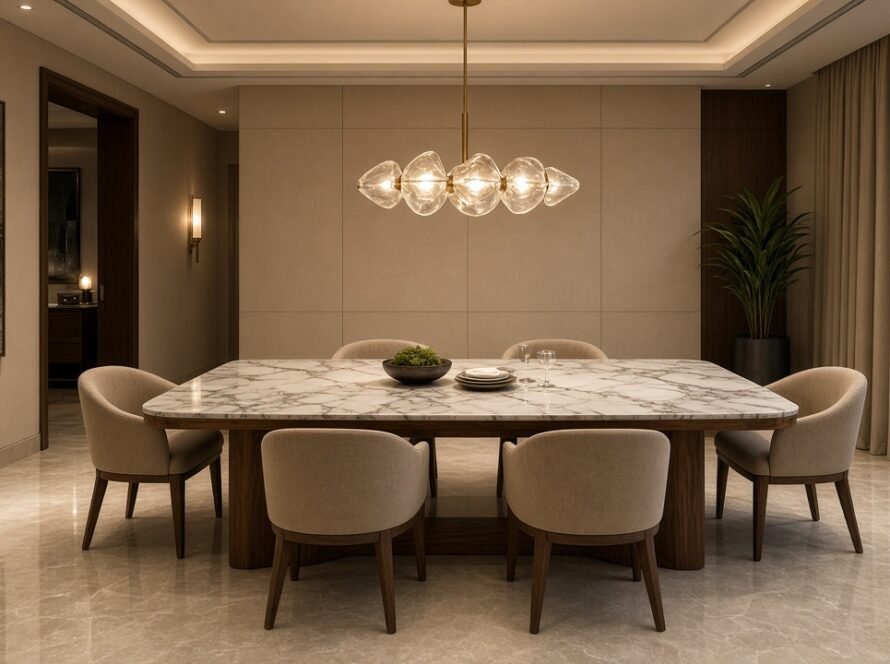
The dining table gets most of the attention, but the piece standing against the wall often decides how well a dining room works. A good sideboard, buffet or crockery unit keeps dinner sets, glasses and serving platters close at hand, gives you somewhere to lay out food, and adds a calm, finished look to the room. This guide explains the differences and how to choose one that suits your home.
Why does dining room storage matter in the hosting season?
Because November to January is when Delhi homes host the most. Wedding functions, family lunches, Christmas and New Year dinners all bring extra guests, extra dishes and extra serving. A well-planned sideboard keeps tableware within reach, frees the dining table for eating and turns into a buffet counter when the house is full.
Traders’ body CAIT estimates that Delhi-NCR alone could see around five lakh weddings between 21 November and 15 December, reports India Today. And Hindustan Times notes that families are investing more in dinnerware and serveware, all of which needs a proper home between occasions.
Sideboard, buffet or crockery unit: what is the difference?
A sideboard is a long, low cabinet with doors and drawers. A buffet is a similar serving piece, sometimes taller or raised on legs. A crockery unit is usually taller, often with glass doors to display dinnerware. Choose a sideboard or buffet for serving space, and a crockery unit when display and vertical storage matter most.
The names are used loosely, so think about what the piece must do: serve, store or display. Larger dining rooms often combine a low sideboard with a taller display unit.
| Feature | Sideboard | Buffet | Crockery unit |
|---|---|---|---|
| Typical form | Long and low, doors and drawers | Similar length, often on taller legs | Tall cabinet, often with glass doors |
| Best for | Everyday storage and a styling surface | Laying out food when hosting | Displaying and protecting dinnerware |
| Serving surface | Good | Very good | Limited, unless it has a counter section |
| Visual weight | Low and calm; leaves room for art above | Lighter, as the floor shows beneath | Strong vertical presence |
| Suits | Most dining rooms and open-plan spaces | Homes that entertain often | Larger dining rooms or a dedicated wall |
What size sideboard suits your dining room?
Start with the wall and the walkway, not the catalogue. As a rough guide, a sideboard looks balanced at about half to two-thirds the length of the wall it sits on, and many are around 40 to 50 cm deep. Leave enough space between the table and the sideboard for a pulled-out chair and someone walking behind it.
Many designers allow roughly 90 cm or more between the table edge and the sideboard, and a height close to table level, often 75 to 90 cm, is comfortable for serving. If you are still planning the table itself, Indesign’s guide to choosing the right dining table size shows how to work out clearances for the whole room.
What should a good sideboard store?
List what you own before you choose. A practical sideboard usually combines shallow drawers for cutlery and table linen, deeper cupboards with adjustable shelves for plates and serving bowls, and space for tall items such as bottles or a water dispenser. Matching storage to your belongings prevents both wasted space and overflow.
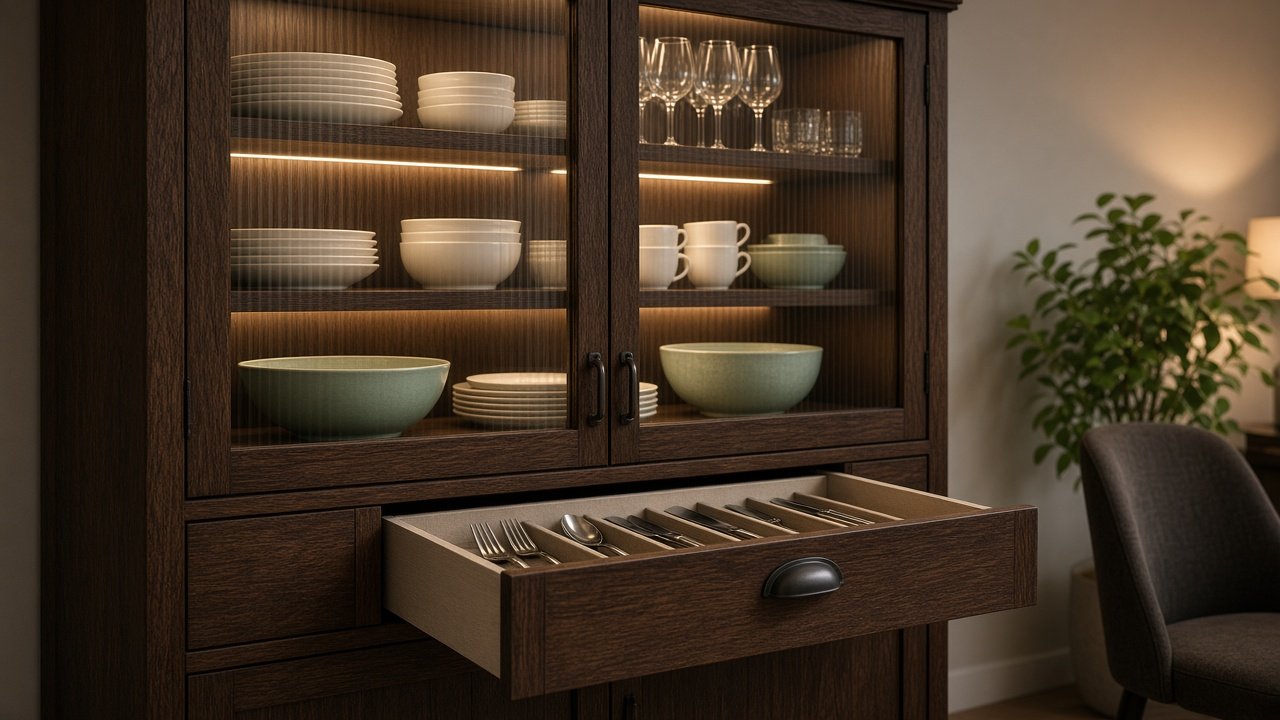
Felt-lined cutlery drawers, soft-close hinges and a cable cut-out for a lamp make daily use easier, and a deeper cupboard at one end suits wedding dinner sets that come out only a few times a year. Leave a little spare room for pieces you will add later.
Which materials work best for a dining sideboard in Delhi?
Solid wood or good veneers bring warmth and age gracefully, while stone or marble tops handle hot dishes and spills well. Lacquer gives a smooth, contemporary finish but shows marks more easily. In Delhi, choose finishes that cope with dry winters and humid monsoons, and doors that close snugly against dust.
Walnut and oak tones are in favour, and fluted glass doors display dinnerware while softening clutter. Smog season brings fine dust indoors, so well-fitting doors beat open shelves for plates and glasses. Indesign’s winter furniture care guide covers how to clean wood, stone and upholstery through the season.
How do you style a sideboard so it looks luxurious?
Keep it edited. Use one strong anchor above, such as a large artwork or mirror, then group a few objects in odd numbers: a pair of lamps, a sculptural bowl and a low floral arrangement. Leave clear surface space so the sideboard can double as a serving counter when guests arrive.
Repeat a wood tone or stone accent from the table or chairs so the room feels planned; Indesign’s guide to choosing dining chairs helps keep finishes consistent.
Should you buy a ready sideboard or have one made to measure?
A ready piece is quicker and lets you see exactly what you are getting. A made-to-measure sideboard suits awkward walls, alcoves or open-plan rooms, and can be planned around your own tableware, from wedding dinner sets to bar glasses. Allow extra time for design and making if you choose bespoke.
Indesign’s dining room collection is built around bespoke dining spaces where the table, seating and storage are designed together,. Bring your wall measurements and a few photos of the room.
Frequently asked questions
What is the difference between a sideboard and a buffet?
In everyday use the terms overlap. A sideboard is usually a long, low cabinet with doors and drawers, often on a plinth or short legs. A buffet is a similar piece intended for serving, sometimes a little taller or on longer legs. Both store tableware and give you a surface for laying out food.
What height should a dining room sideboard be?
Many sideboards sit roughly between 75 and 90 cm high, close to or slightly above dining-table height, which makes serving comfortable. Lower, longer pieces feel more contemporary and leave space for art above. Check the height against your table and any window sills before you decide.
How much space should I leave in front of a sideboard?
Aim to leave enough room for a pulled-out chair and a person walking past. Many designers work with roughly 90 cm or more between the table edge and the sideboard front. In tighter rooms, a slim sideboard or wall-hung unit helps keep the walkway clear.
Is a crockery unit with glass doors a good idea in Delhi?
It can be, as long as the doors close well. Glass doors let you display good dinnerware while keeping out much of the fine dust that settles in Delhi homes, especially in winter. Fluted or tinted glass hides clutter, and soft internal lighting adds a warm glow in the evenings.
Can I have a sideboard made to measure?
Yes. A bespoke sideboard can be sized to an awkward wall, matched to your dining table’s finish and planned around what you store. Allow extra time for design and making.
The best way to judge proportions, finishes and drawer quality is in person. Visit the Indesign showroom in Kirti Nagar at C-29A, Block F, Mansarover Garden, opposite Kirti Nagar Fire Station, New Delhi 110015 (open daily, 10:30am to 8pm), or call +91 93108 51211 to discuss your dining room.