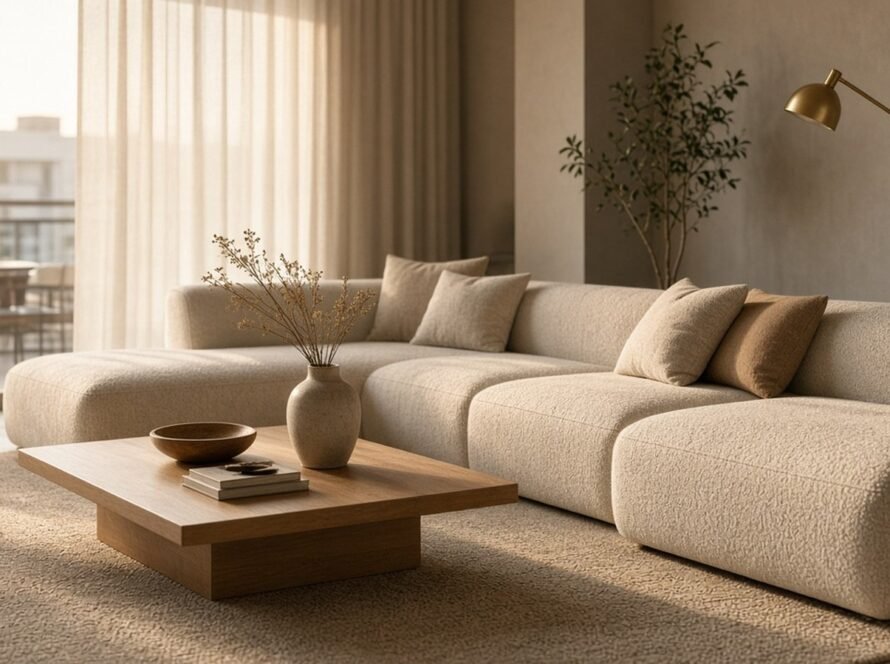
For almost a decade, Indian homes leaned pale: bleached oak, whitewashed laminates and grey-on-grey living rooms. This season, walnut, teak and sheesham tones are back on designers’ moodboards across Delhi NCR. If you are wondering whether dark wood is a fad or a sound long-term choice, this guide explains where it works, what to pair it with and how to care for it through a Delhi winter.
Is dark wood furniture back in trend in 2026?
Yes. Designers across India are describing a move away from bleached, Scandinavian-style woods towards deeper, dimensional timbers such as walnut, teak, sheesham and mahogany. The version that lasts is restrained: dark wood used as an anchor, softened by lighter walls, stone, linen and brass, rather than covering every surface in a room.
A recent New Indian Express feature called the shift less a trend than a material correction, with designers noting that teak, sheesham, sal and Indian oaks are strong local alternatives to imported walnut. Broader 2026 trend coverage points the same way: warm neutrals, visible grain, matte finishes and tactile materials are replacing all-grey rooms and high gloss.
Dark timber also sits comfortably with brass, handloom textiles and heirloom pieces, and hides everyday wear better than very pale finishes. For a calmer interpretation of the same idea, see Indesign’s page on quiet luxury furniture in Delhi.
Which dark woods suit Indian homes: walnut, teak, sheesham or veneer?
Teak and sheesham are the most familiar Indian choices: durable, warm and widely available. Walnut gives the deep chocolate look many people picture, but is usually imported and often used as veneer. Stained or engineered options can achieve a dark tone at lower cost; the difference lies in grain, weight, repairability and how the finish ages.
Treat this as a starting point: colour, quality and price vary widely by supplier, grade and finish.
| Option | Typical look | Strengths | Points to check |
|---|---|---|---|
| Walnut (solid or veneer) | Smooth, chocolate to mid-brown grain | Refined, contemporary feel; pairs well with marble and brass | Usually imported; ask whether it is solid or veneer and how thick the veneer is |
| Teak | Golden to medium brown, mellows with age | Naturally oily and durable; long history in Indian furniture | Quality varies greatly by grade and origin; ask about seasoning |
| Sheesham (Indian rosewood) | Warm brown with darker streaks | Dense, sturdy Indian hardwood with lively grain | Grain can be busy; check finish evenness across panels |
| Stained oak or ash | Smoked or espresso tone with open grain | Strong texture; tone can be tuned to your scheme | Colour comes from the stain, so scratches may show lighter wood |
| Dark veneer on engineered board | Uniform, consistent grain | Stable, lighter in weight, usually more affordable | Core quality and edge banding decide how well it ages |
Where should dark wood go in a room?
Use dark wood on one or two anchor pieces per room: a dining table, centre table, sideboard, bed frame or a set of doors. Anchors with clean, understated silhouettes give a room weight and warmth without feeling heavy. Smaller accents such as trays, stools or frames let you test the tone before committing.
In the living room, a dark wood or wood-and-stone centre table is an easy entry point. Indesign’s centre tables come in stone, wood and metal finishes and can be made bespoke, so you can compare tones side by side. In the dining room, a richly grained table under a warm pendant becomes the gathering point for festive evenings; browse luxury dining tables for marble and mixed-material ideas.
What colours and materials go best with dark wood furniture?
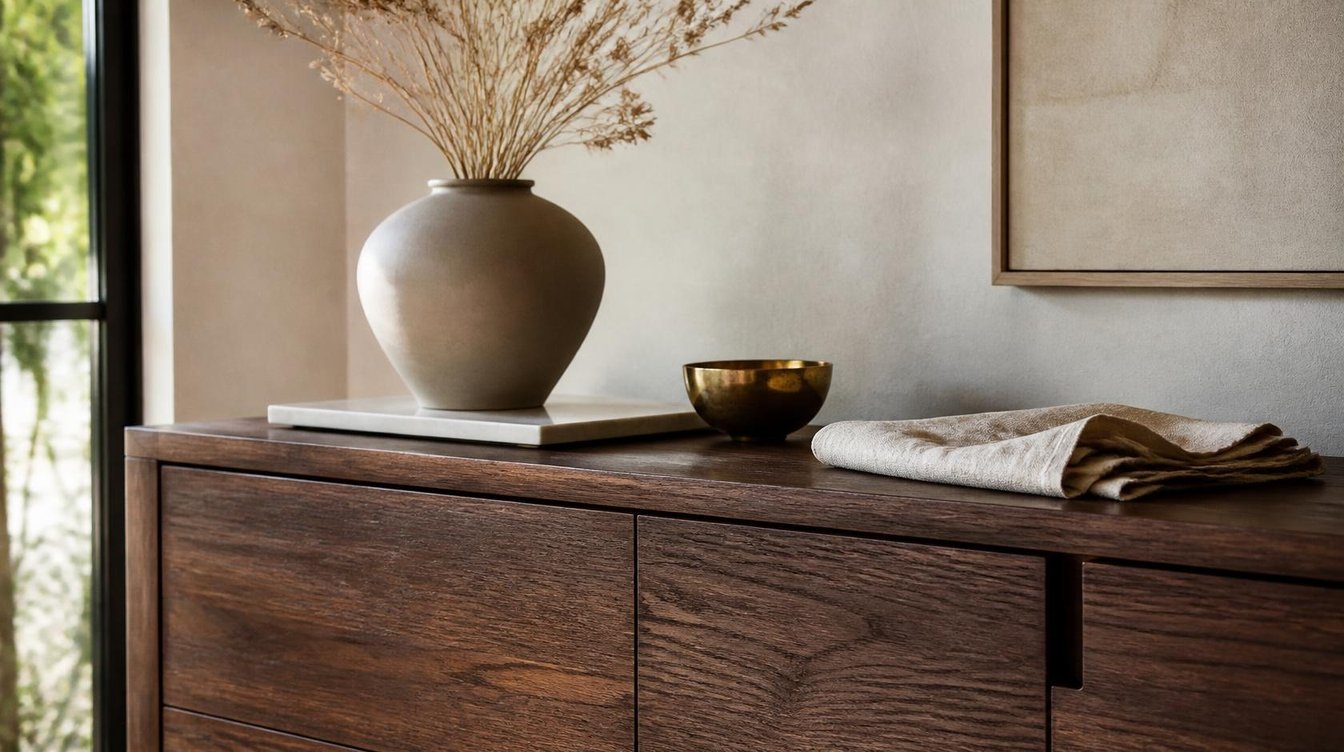
Pair dark wood with light, tactile partners: ivory or limewashed walls, cream and sand upholstery, marble or travertine, linen, jute and a touch of brushed brass. Jewel tones such as emerald, rust or sapphire work well as cushions or a single armchair. The contrast keeps dark timber looking rich rather than gloomy.
- Walls: warm whites, mushroom and soft clay rather than stark white or cold grey.
- Stone: white or beige marble, travertine and honed granite lift dark surfaces.
- Fabrics: linen, wool and textured weaves in sand, ivory or olive.
- Metal: brushed brass or bronze in small doses; avoid too much high-shine chrome.
- Lighting: warm white lamps (around 2700K–3000K) bring out grain; flat cool light can make dark wood look dull.
Avoid matching every piece in the same dark stain; mixing in a lighter timber or stone looks more collected.
Will dark wood make a small Delhi apartment feel smaller?
It can, if the room is dim and every piece is dark and bulky. Dark wood works in compact flats when you keep walls light, choose raised legs or slimmer profiles, limit it to one or two pieces and make the most of daylight. A single dark centre table or sideboard adds depth without shrinking the room.
Rooms that feel dim by late afternoon need more contrast and layered lamps. Mirrors, glass and pale rugs bounce light back onto darker surfaces.
How do you care for dark wood furniture through Delhi’s winter?
Keep dark wood away from heaters and direct AC airflow, use coasters, and dust with a soft, slightly damp microfibre cloth. Wood takes on and gives off moisture as indoor humidity changes, so Delhi’s swing from humid monsoon to dry winter can cause slight movement. Stable conditions protect joints and finishes.
The US Forest Service’s Wood Handbook explains how wood shrinks and swells with changes in moisture, which is why well-seasoned timber and good joinery matter. Dark finishes show dust readily, so wipe them often during the smog season. Avoid harsh sprays and ask your maker which cleaner suits the finish. Strong, direct sun can fade or shift dark tones over time, so sheer curtains help.
What should you ask before buying dark wood furniture?
Ask whether the piece is solid wood, veneer or stained timber, which species it is, what finish protects it and how it should be cleaned. Look at samples in daylight and evening light, check edges and joints, and ask about sourcing. These answers explain price differences better than the colour alone.
If responsible sourcing matters to you, certifications such as those from the Forest Stewardship Council are one way suppliers show where timber comes from. If you want a specific tone, size or stone pairing, bespoke furniture lets you choose the finish with the maker; Indesign’s guide to bespoke vs ready-made furniture explains the trade-offs. Nothing replaces seeing wood in person, so visit the Indesign furniture store in Kirti Nagar before you decide.
FAQ
Is dark wood furniture still in fashion in 2026?
Yes. Indian designers are moving away from bleached and whitewashed woods towards richer walnut, teak and sheesham tones. The look that lasts is restrained: one or two dark wood anchors per room, balanced with light walls, stone and natural fabrics, rather than dark wood on every surface.
Does dark wood furniture make a room look smaller?
It can if the room is dim and every piece is dark. Raised legs, slimmer profiles, lighter walls and good daylight keep dark wood from feeling heavy. In compact flats, start with a single dark piece such as a centre table, sideboard or bed frame.
Is a walnut finish the same as walnut wood?
Not always. A walnut finish can be a stain or veneer on another timber or an engineered board, while walnut wood refers to the species itself. Both can look good; simply ask what the core material is, how thick any veneer is and what finish protects it.
How do I protect dark wood furniture in Delhi’s winter?
Keep pieces away from heaters, radiators and direct AC airflow, use coasters and mats, and dust with a soft, slightly damp microfibre cloth. Seasonal swings in humidity make wood expand and contract, so steady indoor conditions help joints and finishes last longer.
Where can I see dark wood and stone furniture in Kirti Nagar?
Indesign is a bespoke luxury furniture showroom and authorised KUKA Home dealer at C-29A, Block F, Mansarover Garden, opposite Kirti Nagar Fire Station, New Delhi 110015. It is open daily from 10:30am to 8pm; call +91 93108 51211 before visiting.
If you are planning to bring warmer wood tones into your home this winter, visit Indesign in Kirti Nagar or call +91 93108 51211 to compare finishes, stone pairings and bespoke options in person.