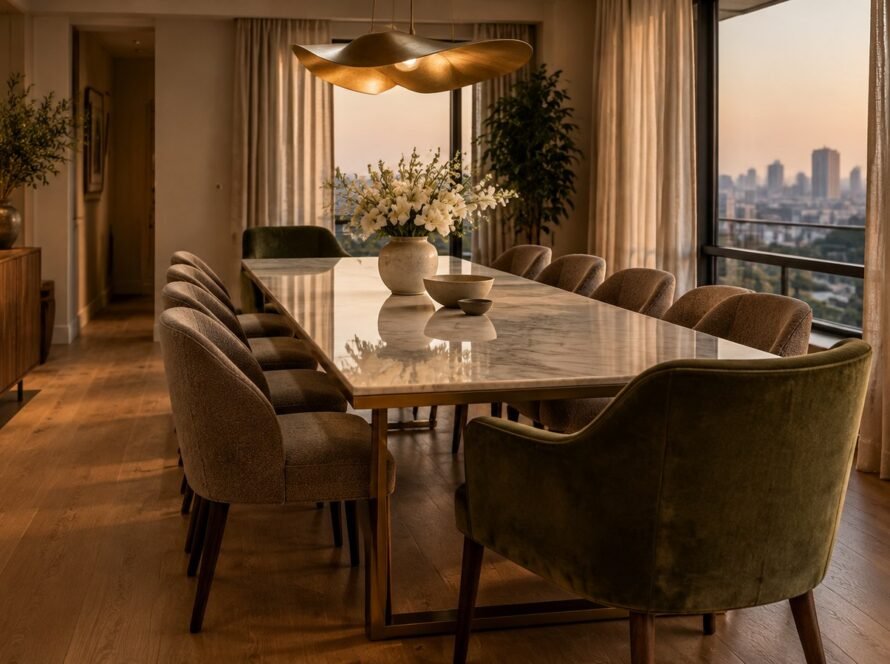
In many Delhi NCR apartments the living room has to do three jobs: everyday family seating, a place to work from home, and a reception space when relatives arrive for weddings and festivals. That is why the first shopping question is often not colour or fabric, but whether to buy a fixed sofa or a modular one. This guide compares both for Indian apartments and hosting, so you can choose with the room — and the busy season — in mind.
Why does sofa flexibility matter more during wedding season?
Because guest numbers swing week to week. Between Diwali leftovers and the late-November wedding dates, the same room may seat four on a quiet evening and twelve for tea and mithai. A sofa that can add a chaise, pull a section forward or leave a clear walkway makes hosting less awkward without turning the flat into a waiting hall.
Drik Panchang lists only four auspicious marriage dates for New Delhi in November 2026 (21, 24, 25 and 26), with more in December. ETRetail reporting notes living and bedroom categories leading festive growth, with purchase cycles shortening for sofas. If you are refreshing seating before guests arrive, modular versus fixed is the decision that shapes everything else.
What is the difference between a modular sofa and a fixed sofa?
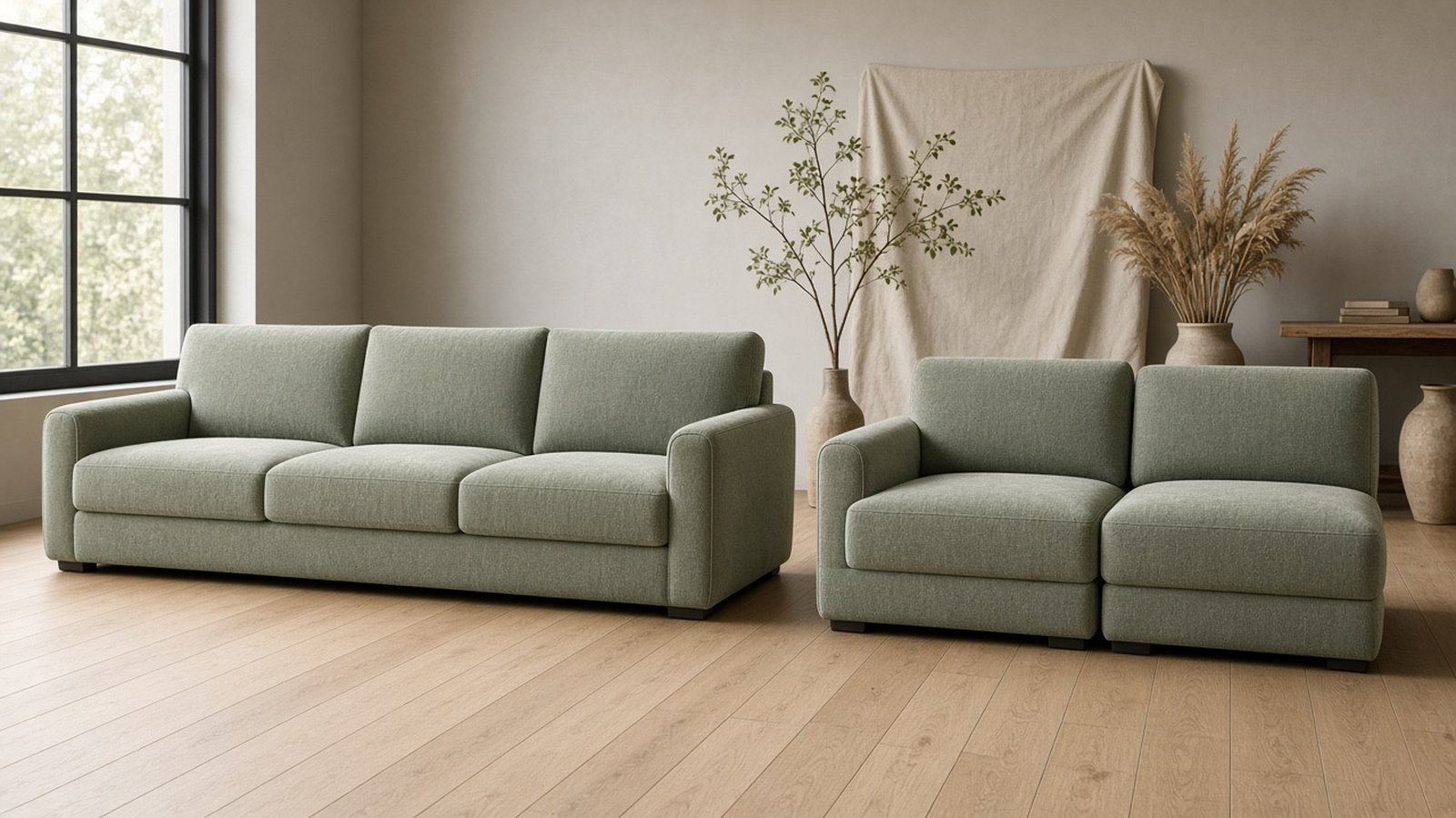
A fixed sofa is built as one connected frame in a set size — typically a two-seater, three-seater or fixed L-shape. A modular sofa is made of separate sections (arm modules, armless seats, corners, chaises, ottomans) that join with brackets or connectors, so you can rearrange, add or remove pieces as the room and the guest list change.
Both can look tailored and luxurious. The difference is how easily the seating plan can change after delivery. Fixed sofas often feel more continuous and solid underfoot; modular systems trade a little of that one-piece feel for flexibility and, often, an easier route up the lift.
Which works better in a Delhi apartment: modular or fixed?
Choose modular if the living room is open-plan, shared with dining, or likely to change when you move or host. Choose a fixed sofa if the wall run is clear, you want one uninterrupted silhouette, and you rarely rearrange. Many Delhi flats land in the middle: a compact modular L daily, plus an accent chair for overflow guests.
Tape the footprint on the floor before you buy. Mark walks to the balcony, kitchen and entrance, and leave roughly 75 to 90 cm on busy paths. Measure the lift, lobby turns and flat door as carefully as the room. For fabric that copes with Delhi heat, dust and heaters, see Indesign’s guide on leather versus fabric sofas for the Delhi climate.
Modular vs fixed sofa: how do they compare?
There is no universal winner. Modular usually wins on flexibility, apartment delivery and later reconfiguration; fixed often wins on visual continuity and a simpler one-piece feel. Use the table as a general guide, then sit on both in person before you decide.
| Factor | Modular sofa | Fixed sofa |
|---|---|---|
| Layout flexibility | Sections can usually be rearranged or extended | Shape is set; moving it only relocates the same block |
| Hosting spikes | Add a chaise, ottoman or armless seat when guests arrive | Rely on accent chairs or floor cushions for overflow |
| Delivery into apartments | Sections often fit lifts and tight turns more easily | Large one-piece frames may need dismantling or a crane route |
| Look and feel | Joins are usually discreet; can look more contemporary | One continuous frame can feel more formal and seamless |
| When you move home | Easier to reconfigure for a new room shape | May be too long or the wrong handedness for the next flat |
| Best for | Open-plan rooms, growing families, frequent hosting | Clear wall runs, formal drawing rooms, stable layouts |
How should you size a sofa for hosting in an Indian living room?
Size for your busiest regular gathering, not only the quietest evening. Seat the household comfortably every day, then plan overflow with an accent chair, a chaise module or a bench rather than stretching one sofa so deep that the room loses its walkways.
Practical checks:
- Seat depth: deeper seats suit lounging; a firmer, more upright seat is easier for older relatives to rise from on long visiting days.
- Conversation distance: people facing each other should still reach a centre table comfortably.
- TV versus talk: if the sofa must face both the television and guests, a modular corner or swivel accent chair often works better than a rigid three-seater alone.
Recent coverage, including The Hindu on sofa design trends, highlights softer curves, deeper seats and modular forms. Pairing the sofa with a side seat is covered in Indesign’s guide on how to choose an accent chair.
Does a modular sofa look less luxurious than a fixed one?
Not if the proportions, fabric and detailing are right. Luxury here is about comfort, materials and how the pieces sit in the room, not whether the frame was built as one piece. Clean connectors, matched upholstery and a calm silhouette matter more than the construction category on the invoice.
Quiet-luxury rooms in Delhi favour tactile fabrics such as bouclé and chenille, warm neutrals and matte woods — finishes that suit both modular and fixed frames. For a low leather lounge look, see Indesign’s KUKA collection in person; fabric pieces in the living room and sofa ranges show how modular sections can still read as one composed sofa.
Should you buy ready-made or bespoke seating?
Ready-made modular or fixed sofas work when a standard size already fits your wall, lift and hosting pattern. Bespoke makes sense when the room is long and narrow, you need a particular seat depth or arm height, or you want fabric and dimensions matched to the rest of a quiet-luxury scheme.
Indesign makes bespoke living-room seating as well as offering collection pieces; for the wider decision framework see bespoke versus ready-made furniture. Always sit for several minutes in the exact configuration you plan to order, and approve fabric in daylight rather than under showroom spots alone.
FAQ
Is a modular sofa better for small Delhi apartments?
Often yes, because sections can form a compact L that frees the centre of the room, and individual modules usually travel through lifts more easily than one large fixed frame. It is still worth taping the layout: a modular sofa that is too deep will shrink a small room just as much as a fixed one.
Can you add pieces to a modular sofa later?
Many modular systems are designed so you can add a chaise, armless seat or ottoman later, provided the connector type and fabric batch still match. Ask the maker how long they keep the same fabric and brackets before you rely on a future extension.
Do modular sofas feel less sturdy than fixed sofas?
A well-made modular sofa should feel stable when you sit and when someone perches on an arm. Check how sections lock together, whether feet share the load evenly, and whether the seat support is webbing, springs or another system you are comfortable with. Construction quality matters more than the label modular or fixed.
What sofa shape is best for wedding-season hosting?
An L-shape or a modular arrangement with a chaise usually seats more people without blocking the room, while a straight three-seater plus one or two accent chairs keeps conversation groups flexible. Leave clear paths to the door and kitchen; hosting fails when guests cannot move past the coffee table.
Should I choose leather or fabric for a hosting sofa?
Leather wipes clean after snacks and is popular for low, lounge silhouettes; fabric, especially textured weaves, feels warmer in winter and hides daily life well if you pick a practical colour. Match the choice to pets, children and how often you entertain, and compare options in Indesign’s leather-versus-fabric climate guide.
If you would like to sit in modular and fixed configurations side by side, or check a sofa against your room and lift measurements, visit the Indesign showroom in Kirti Nagar at C-29A, Block F, Mansarover Garden, opposite Kirti Nagar Fire Station, New Delhi 110015 (open daily, 10:30am to 8pm), or call +91 93108 51211.