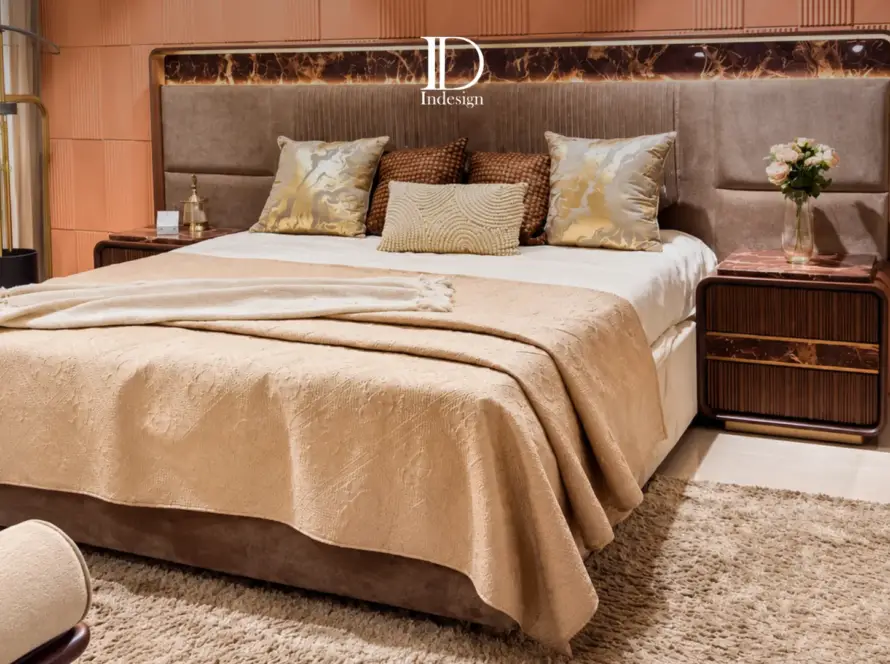
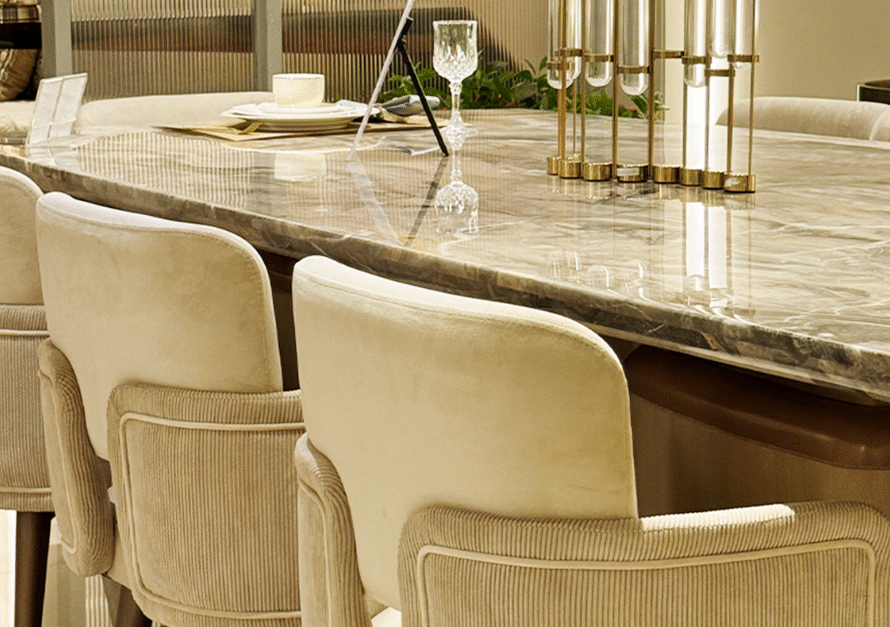
The coffee table, or centre table as most Indian homes call it, is the hardest-working surface in the living room. It holds the evening chai, the dry-fruit platter, the children’s homework and, through the wedding season, plates of mithai for a steady stream of relatives. Choosing one well comes down to three things: size, shape and material.
Why does the coffee table matter more in wedding season?
Because the living room becomes a reception room. Between ceremonies, families host relatives, neighbours and well-wishers for tea and snacks, often several groups a day. A table that is the right size, easy to reach from every seat and tough enough to wipe down quickly makes that hosting far easier, and safer for guests moving around it.
This year the busy period is compressed. Drik Panchang lists only four auspicious marriage dates for New Delhi in November 2026, from the 21st, followed by more in December. If you are refreshing the living room before guests arrive, the centre table is one of the quickest changes with the most visible result.
What size coffee table should you choose?
A widely used guideline is a table roughly half to two-thirds the length of your sofa, with its top level with or slightly below the sofa seat, and about 40 to 45 cm of space between the table edge and the seat. These are rules of thumb rather than fixed standards, so always check them against your actual room.
Before you buy, try these quick checks:
- Tape it out: mark the table’s footprint on the floor with masking tape and live with it for a day or two.
- Reach test: from every seat, you should be able to put a cup down without getting up.
- Walkway: keep a main path through the room clear; many designers suggest around 75 to 90 cm for a route people use constantly.
- Delivery route: heavy stone tops need to fit through doors and lifts, and may need several people to carry.
Which coffee table shape suits your seating?
Let the sofa decide. Long straight sofas pair naturally with rectangular or oval tables; L-shaped and curved sofas work well with round or oval tops; a square arrangement of seating suits a square or round table. Rounded edges are kinder in busy family homes and in tight rooms, where guests brush past corners.
Nesting tables, two or three that tuck under one another, are worth considering if you entertain in bursts: pull them apart when guests arrive and tuck them away afterwards. A pair of matching smaller tables can also replace one large table in front of a wide sofa. Recent Indian design coverage, including Architectural Digest India, shows a clear move towards softer, sculptural shapes in stone, timber and metal.
Marble, wood or glass: which coffee table top is best?
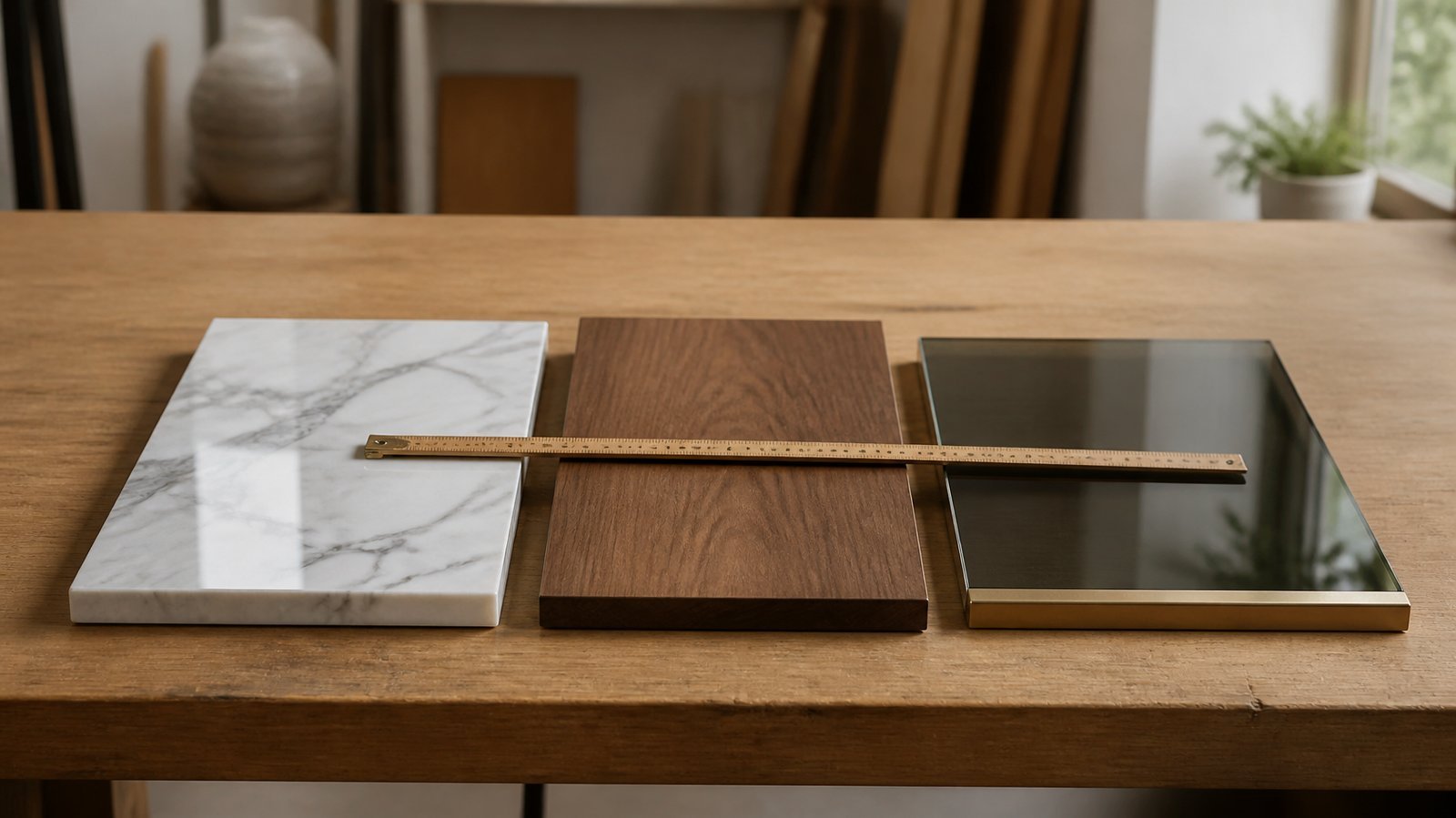
There is no single best top; it depends on how you live. Marble and stone look luxurious and stay cool and solid, but need some care. Wood is warm, forgiving and repairable. Glass makes a small room feel lighter and wipes clean easily, but shows fingerprints and dust. The table below compares the common options in general terms.
| Top material | Look and feel | Everyday practicality | Care to expect | Best for |
|---|---|---|---|---|
| Marble | Luxurious, cool, distinctive veining | Solid and heat tolerant; can etch with acidic spills | Coasters, prompt wiping, periodic sealing for stains | Formal living rooms, statement pieces |
| Other natural stone (e.g. granite, quartzite) | Strong, more uniform pattern | Generally more resistant to everyday acids | Mild, neutral cleaners | Hard-working family rooms |
| Solid wood or veneer | Warm, natural grain | Forgiving; can mark from heat and water rings | Coasters and trays; refinishing over time | Relaxed, everyday living |
| Glass (tempered) | Light, see-through, airy | Easy to wipe; shows fingerprints and dust | Frequent cleaning; ask about glass thickness | Small rooms, showing off a rug |
| Metal base with any top | Slim, modern, crisp lines | Durable frame; finish can scratch | Soft cloth; avoid abrasive cleaners | Contemporary rooms, mixing materials |
How do you care for a marble coffee table?
Treat marble as a beautiful but sensitive surface. It is mostly calcium carbonate, so acids in lemon, tamarind, tomato and wine can leave dull etch marks, while oils and turmeric can stain. Use coasters and trays, wipe spills straight away, and clean with a mild, pH-neutral stone cleaner rather than anything acidic.
The Natural Stone Institute notes that products containing lemon, vinegar or other acids may dull or etch calcareous stones such as marble, and that abrasive scouring creams can scratch. Sealing helps resist stains, but it does not stop etching. A honed (matt) finish tends to show light etching less than a high polish, which is worth knowing if your table will carry chaat and nimbu pani all season. In Delhi winters, a soft dry cloth also lifts the fine dust that settles on dark stone and glass.
Should the coffee table match the rest of the living room?
It should relate, not match. The table is a good place to introduce a second material, such as stone beside a fabric sofa or warm wood beside leather. Repeat its finish once elsewhere, perhaps in a side table, lamp base or tray, so the room feels considered rather than bought as a set.
Think about the whole seating group together. If you are also adding a statement chair for guests, Indesign’s guide on how to choose an accent chair covers seat heights and spacing that work alongside the table.
Should you buy a ready-made or bespoke coffee table?
Ready-made works well when a design you like already fits your sofa and room. Bespoke makes sense when you need an unusual length, a particular height to match a low or high sofa, a specific stone or finish, or a shape for an awkward layout. In both cases, see the material in person before deciding.
Indesign’s designer coffee tables combine materials such as marble, glass, wood and metal, and its centre tables come in stone, wood and metal finishes, available in bespoke sizes. For the wider decision, see bespoke vs ready-made furniture.
FAQ
What size coffee table do I need for a three-seater sofa?
A common guideline is a table about half to two-thirds the length of the sofa. For a three-seater of around 210 to 240 cm, that usually means a table of roughly 110 to 150 cm long. Check the walking space around it before deciding, as clearance matters as much as length.
How high should a coffee table be?
Aim for a table top level with, or a few centimetres below, the sofa seat. Most sofa seats sit at roughly 40 to 45 cm, so most coffee tables fall in a similar range. A table much higher than the seat feels awkward, while a very low one makes guests stoop to reach a cup.
Is a marble coffee table practical for everyday use?
It can be, if you accept a little patina. Marble is calcium-based, so acidic spills such as lemon, tamarind or wine can etch dull marks, and sealing helps with stains rather than etching. Use coasters and trays, wipe spills quickly and choose a honed finish if you want marks to show less.
Is a round or rectangular coffee table better?
Rectangular tables suit long straight sofas and give the most surface for serving. Round and oval tables suit L-shaped or curved seating, tighter rooms and homes with young children, because there are no corners to walk into. In a square arrangement of seating, a square or round table usually looks most balanced.
What is the difference between a coffee table and a centre table?
In India the two names are largely used for the same piece: the low table in front of the sofa. Some people use ‘centre table’ for a table placed in the middle of a seating group, and ‘coffee table’ more loosely, but the sizing and material advice is the same for both.
If you would like to compare marble, wood and glass tops side by side, or check a table against your sofa’s proportions, visit the Indesign showroom in Kirti Nagar at C-29A, Block F, Mansarover Garden, opposite Kirti Nagar Fire Station, New Delhi 110015 (open daily, 10:30am to 8pm), or call +91 93108 51211.